Jingye Xu, chef-founder of Shanghai’s two Michelin-starred establishment 102 House, may never have imagined mapping a culinary journey across three cities. In hindsight, though, the footprint is clear, from traditional cooking in Foshan to the expressive kitchen in Shanghai, and a more retrospective voice in Macau.
Foshan, Shanghai, Macau, three places, three concept ideas. Threading them together is his evolving understanding of Cantonese cuisine, which is how to stay rooted while still moving forward.
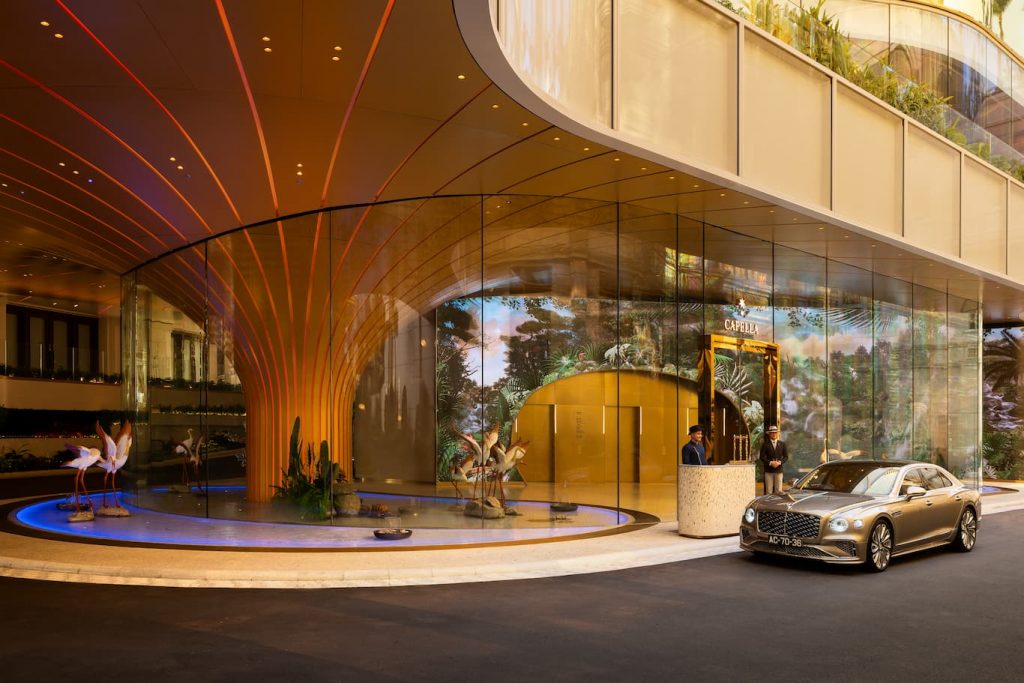
At House of Origin, tucked inside Capella at Galaxy Macau, this philosophy reaches its purest form. This is not a restaurant that performs fine dining, it’s a sense of coming home.
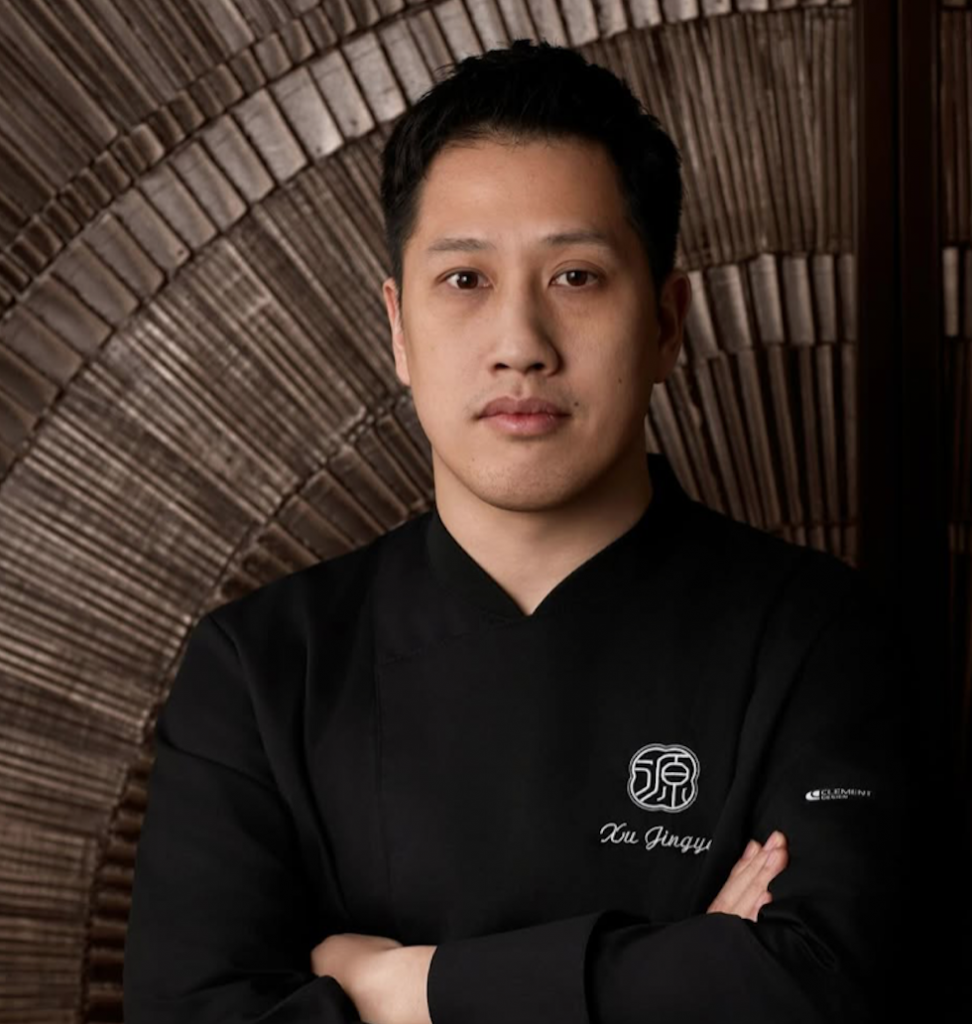
“We don’t focus on plating or showmanship. We care about serving each at its best moment. It’s closer to eating at home,” said Chef Xu.
From memory to table
“I used to eat at dai pai dongs, but I was most comfortable eating at home,” recalled the principal of Galaxy Entertainment Group. From that impulse, the House of Origin was born.
Chef Xu makes that feeling – a return to the comfort of the familiar – tangible. Precision softens into naturalness, sophistication settles into daily life and dining regains its essential purpose. For him, House of Origin is also a space where his philosophy exists without compromise.

Its character sits in counterpoint to the modernity of Capella. A black façade reminds of Lingnan private residences, no ornament, only considered detail. A small landscaped entrance nods to southern garden traditions, from water to stone and gentle movement. Inside, two private rooms, Qian and Kun, reference the natural order of heaven and earth, echoing the space in a wisdom of balance.
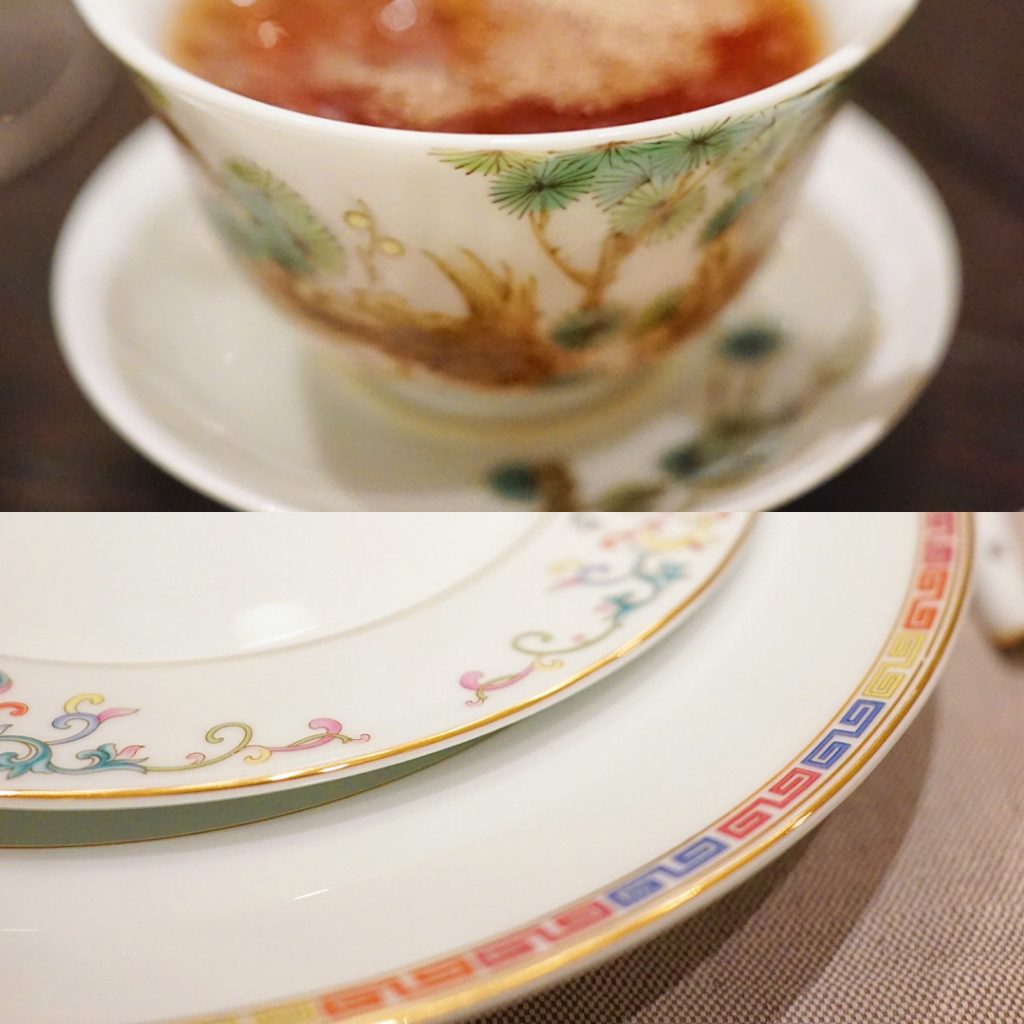
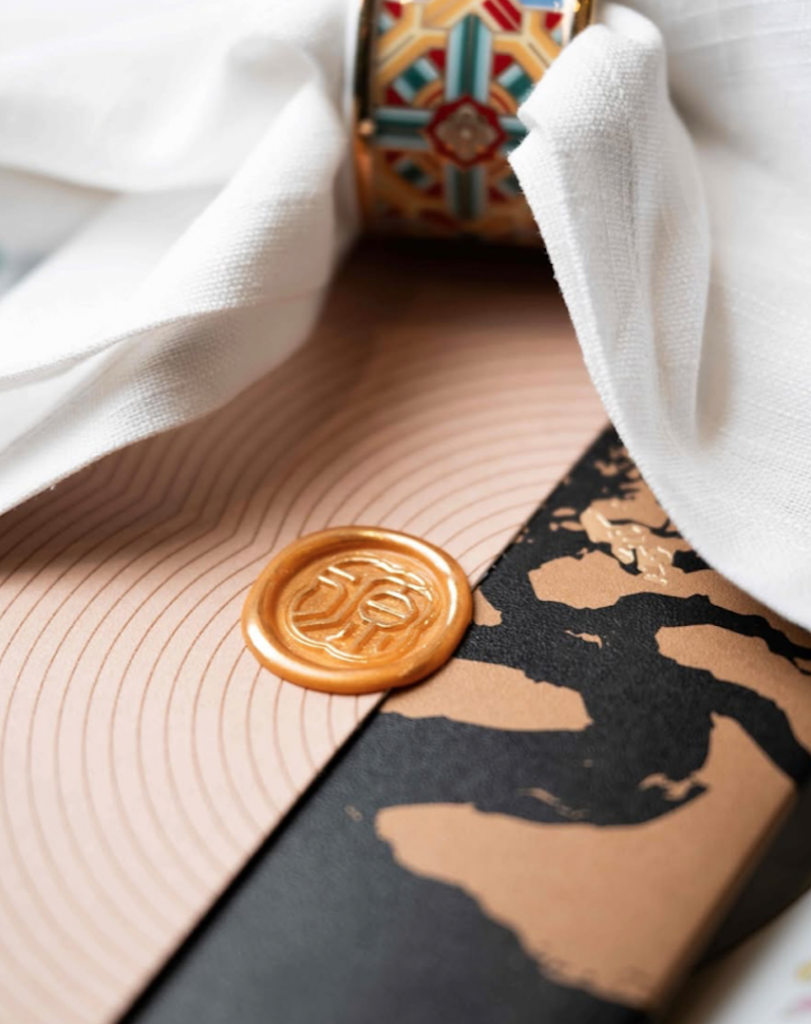
Interiors feel lived-in rather than styled. Old ceramics, vinyl records, photographs, and personal collections create heart-warming familiarity. Even the tableware reflects the Lingnan culture in form. Nothing calls attention to itself, yet everything contributes to continuity. Ceremony is minimal, and guests might dine in slippers. What matters is not presentation, but the relationship between people, food, and time.
In Shanghai, Chef Xu works within pace and market expectations. In Macau, he strips everything away, removing flourish until only what matters remains, like true flavor and proper heat.
“Some of my ideas couldn’t be presented in Shanghai,” he admitted, “but I can make them happen here.”
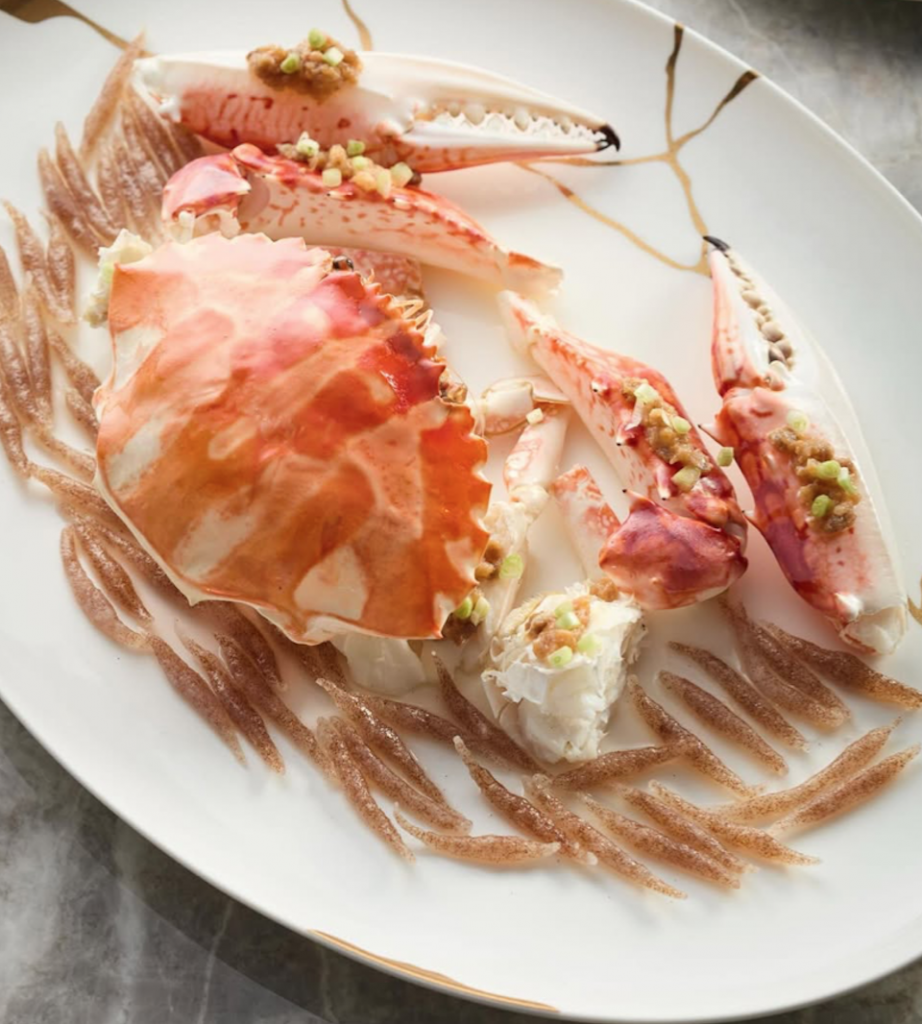
Asked to define what they are, he pointed to cultural differences with the dish steamed flower crab with silver needle noodles as an example. In Guangdong, its subtleties are easily understood, but less so in Shanghai. What appears four or five layers of sweetness and umami taste, an appreciation shaped as much by cultural memory as by taste.
Back to Lingnan origins
For Xu, seasonality, locality and freshness are non-negotiable, guided by a conviction that the simplest methods are often the most exacting. He avoids embellishment, focusing instead on the integrity of flavor in every dish.
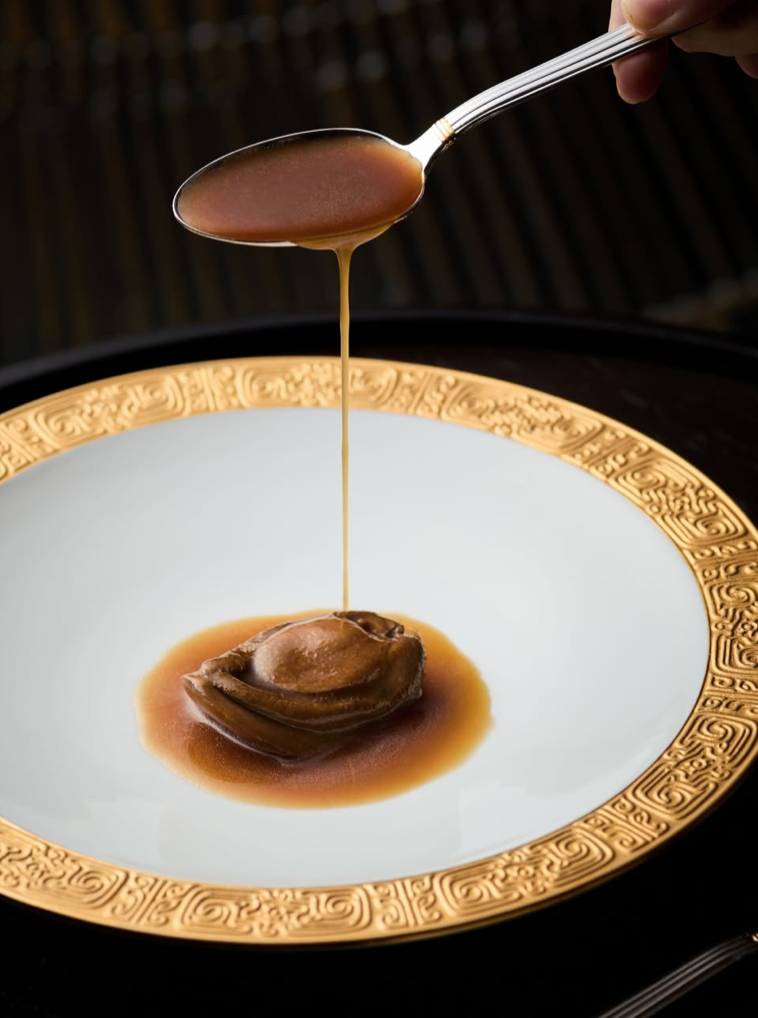
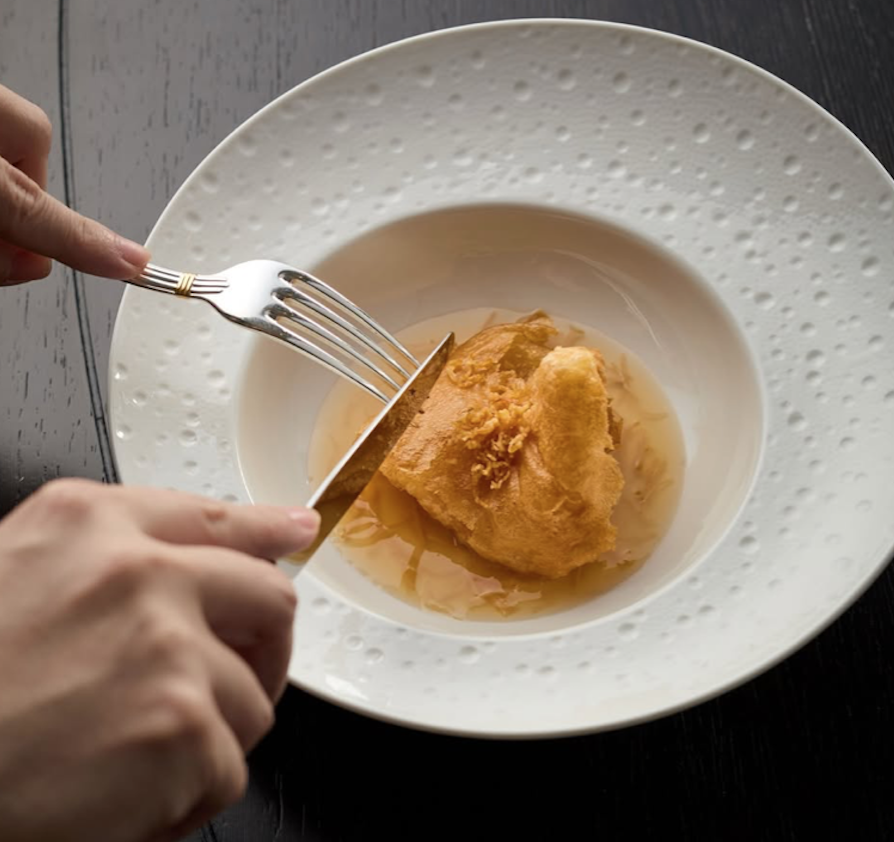
The signature braised abalone, when many kitchens turn to pork skin to thicken the sauce, Chef Xu works with fish maw, slow-braised until its natural collagen fuels the body. It is achieved without shortcuts, and rooted in a respect for Cantonese technique.
The same rigor extends to flavors at risk of fading. Handmade shrimp paste, local fish and other coastal ingredients are brought back into the menu.
Nowhere is this more evident than in the steamed flower crab with silver needle noodles. Once a staple in the Lingnan region, these labour-intensive noodles have largely disappeared.
Xu revives them using traditional methods. Rice flour mixed with aged dough and clam broth, each strand rolled by hand, dusted with shrimp roe and steamed to order. The crab’s sweetness unfolds in layers – meat, roe, juices – absorbed and refracted by the noodles, creating a umami taste.”People think the crab is the star, but it’s the noodles,” explained Chef Xu.
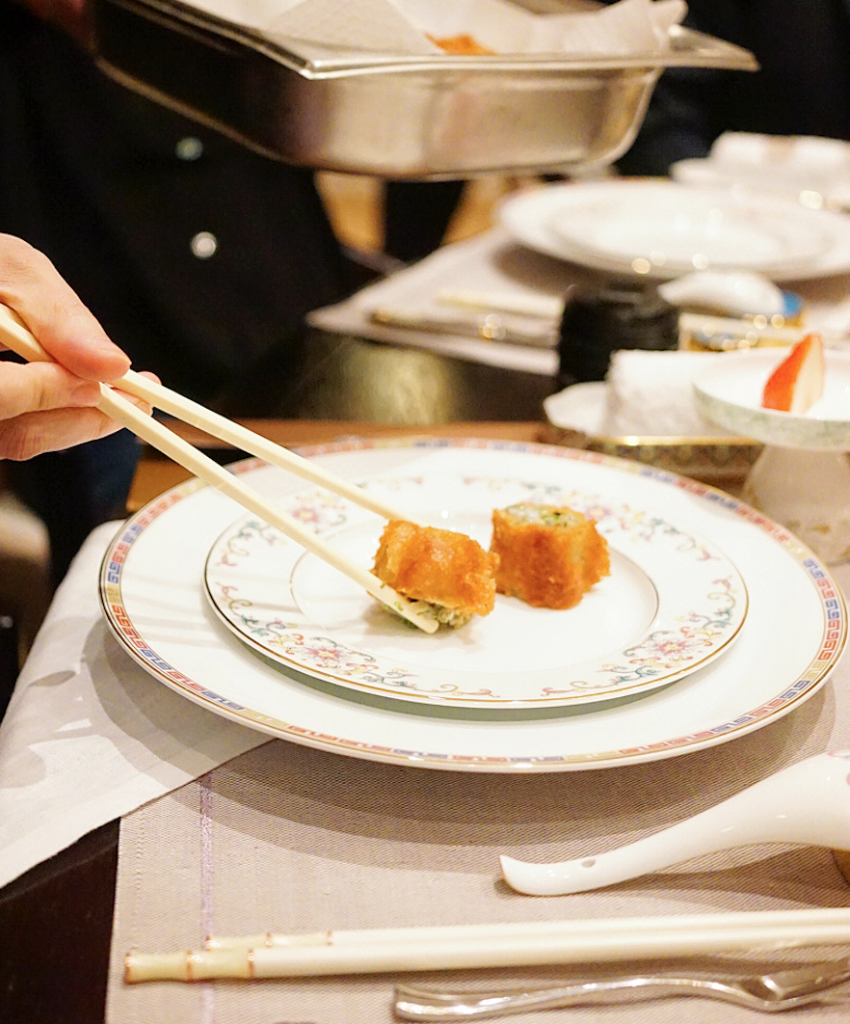
Across the menu – aged preserved lemon and fish maw duck soup, mustard greens with Shunde-style chilli cakes, peppery pork tripe rice noodles – a principle is to elevate the everyday rather than rely on rarity. Familiar dishes are clarified, distilled to their essence, and brought into sharper focus.
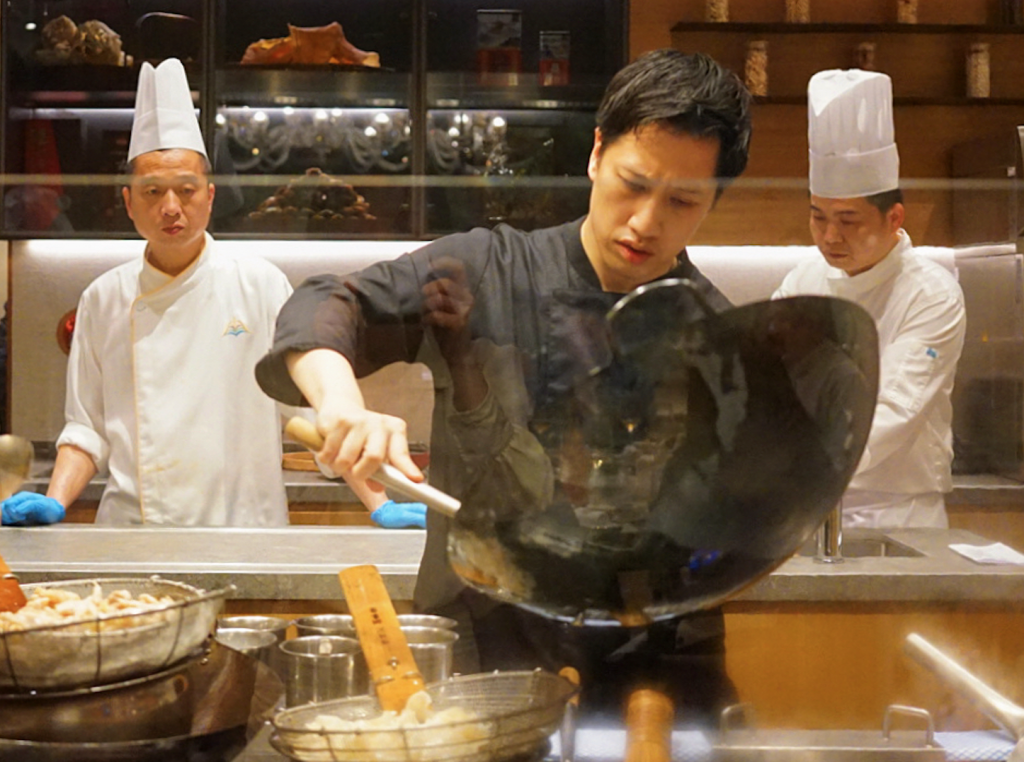
An open kitchen levels up the experience. Heat, timing and movement are fully visible, as well as dishes travel directly from wok to table, capturing flavour at its peak.
As Chef Xu put: “Cooked to order, served at once – that’s how you deliver the truest flavor at the right temperature.” A simple idea, but one that speaks to a fidelity to Cantonese tradition.
Rooted within, reaching forward
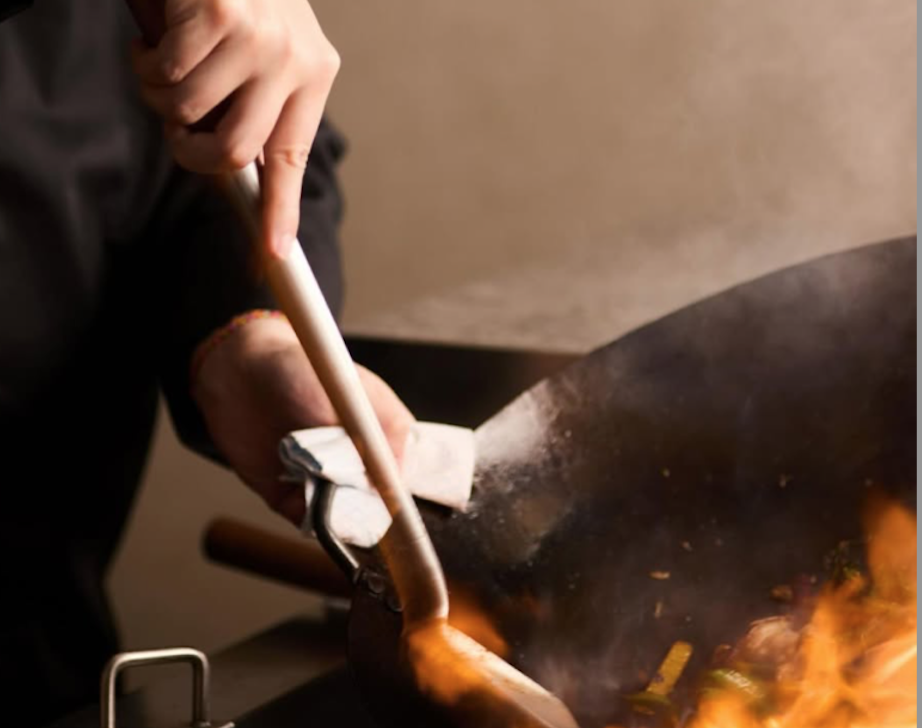
If Chef Xu were only preserving tradition, his Cantonese cooking may feel short of something essential. That missing element is not technique or experience, but it’s an understanding for what must be kept, and what change.
What he preserves are the fundamentals, seasonality, terroir, freshness and heat. Other things like technique and flavor are open to reinterpretation.
His idea of the modern family banquet makes this plain.
“It used to be that from a kilo of beef, only the best cuts mattered. Now the question is how to use the rest well.” He said in moving from selectivity to completeness, Cantonese cuisine edges closer to its essence.
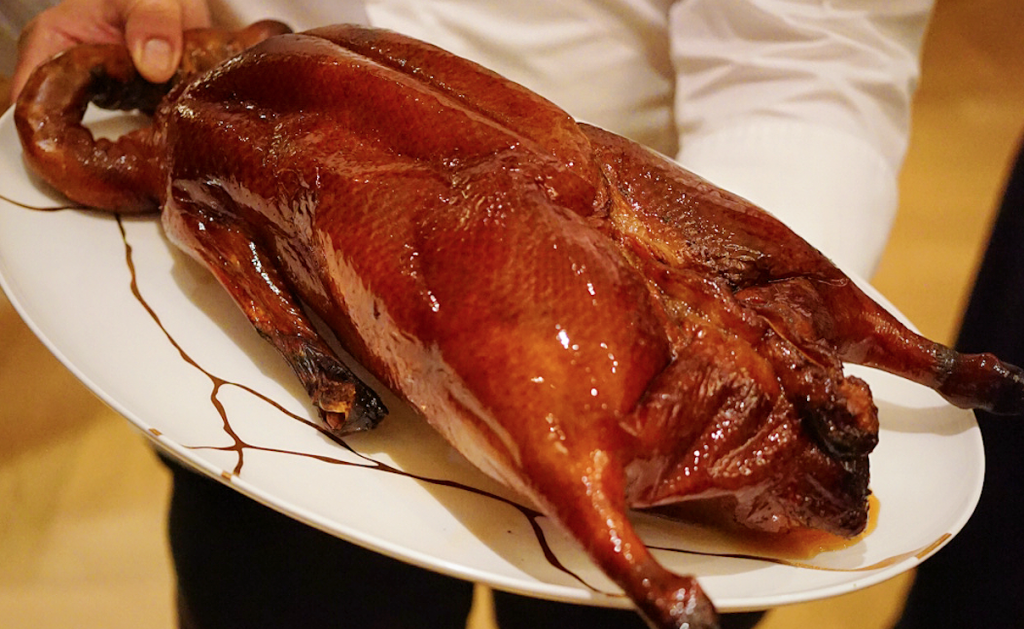
Black pepper roast goose is a popular dish in Macau. Xu looks instead to the familiarity of Cantonese home cooking. His version is smoked with apple wood and cane sugar, then slow-roasted over charcoal, marrying crisp skin with the gentleness of a braise. It is both recognizable and new.
Here, simplicity is a choice. Strip away the unnecessary, then keep only what matters. In a dining culture often driven by presentation, it is flavor, temperature and an ease that resonate most. Chef Xu’s root and reach is a continual and open question of what allows Cantonese cuisine to endure.
At House of Origin, a meal that feels like home while with a gesture going towards what comes next.