Chef collaborations are everywhere – some quickly fade and others linger. Those that endure ground in a mutual understanding of culture and technique. The Langham Hospitality Group’s Yue Jian dining series, created with Beijing’s one Michelin-starred Zhiguan Courtyard, stands out for this reason. Rather than presenting it as spectacle, Yue Jian is designed for an exchange, among chefs, regions, cuisines and the wider landscape of Chinese food culture.
Take a step forward
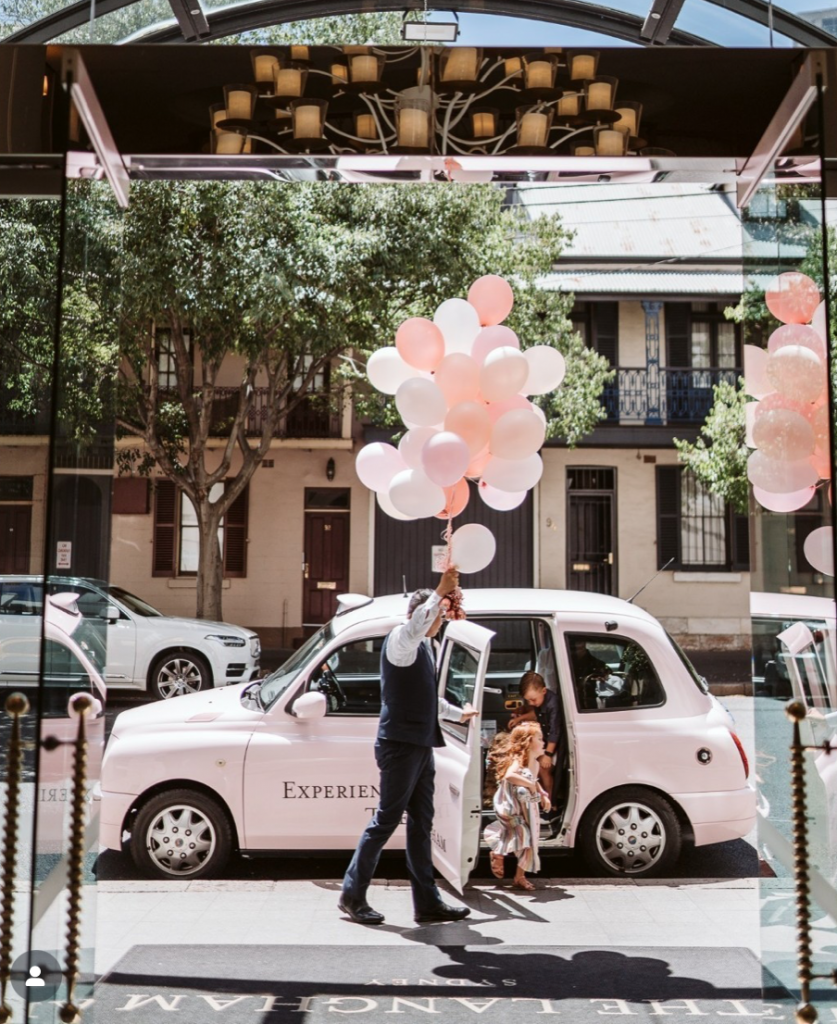
Langham has long navigated a quiet luxury in the hospitality world. It neither chases trends nor courts attention, yet its presence is unmistakeable.
While chef collaborations have become a global phenomenon, the group has stayed silent – until it launched this official dining series, later than most. Silently belated, it’s likely a careful thought.
For a heritage hotel group, the decision to evolve publicly carries weight. Significantly, the debut of Yue Jian was in Shanghai, not Langham’s traditional stronghold of Hong Kong, showing a signal of stepping beyond convention.
This is no one-off gesture, of which Langham pairs its two flagship Cantonese brands, T’ang Court and Ming Court, with Zhiguan Courtyard in an ongoing exploration, framing the collaboration as a sustained exchange rather than a seasonal event.
Chemistry, not celebrity
With its international reach, Langham could have pursued headline-grabbing celebrity chefs. Instead, it co-works with Zhiguan Courtyard which is known for contemporary Northeastern Chinese cuisine.
The collaboration is also personal, built on the a friendship between Chef Paul Qian of Ming Court at Cordis Shanghai Hongqiao and Chef Longshan Chang of Zhiguan Courtyard.
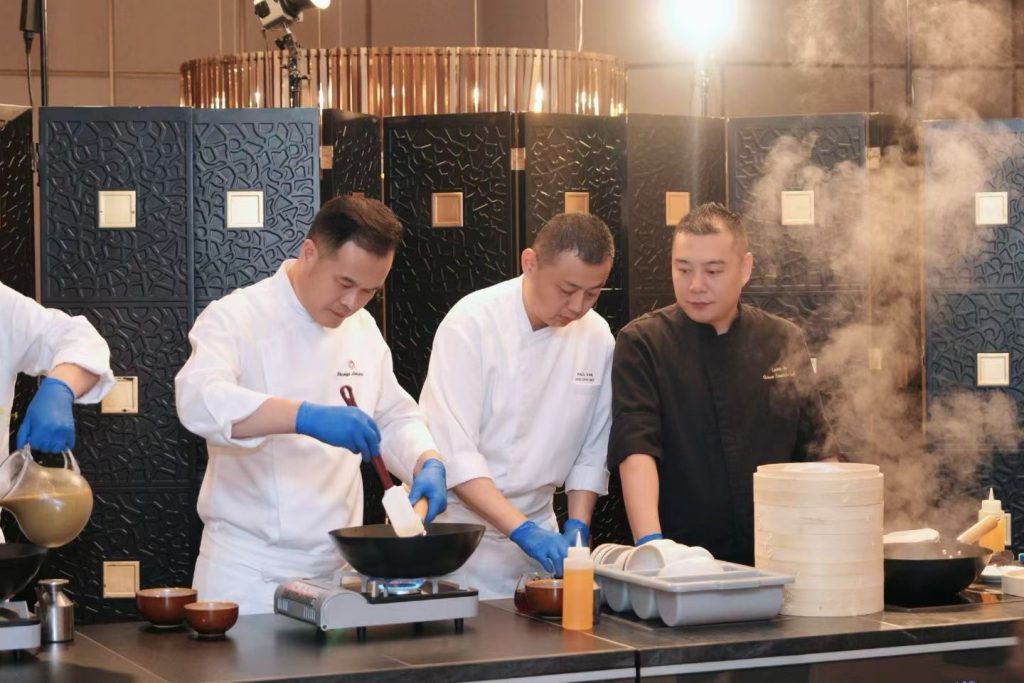
That rapport shaped the cooking. One chef from the south, one from the north, they approached the menu with ease and mutual respect – no performative gesture, no luxury for luxury’s sake. Dishes like ginger-and-scallion baked Bohai Bay hairtail and crispy suckling pig paired with fragrant rice and shrimp-oil–dressed Northeastern cabbage felt comfort, a meeting of north and south at the table.
In a rare move, the kitchen was relocated into a private dining room. Stripped of theatrical open-kitchen flair, the dining experience was intimate, drawing diners closer to both the food and the people behind it.
Cantonese cuisine on new terrain
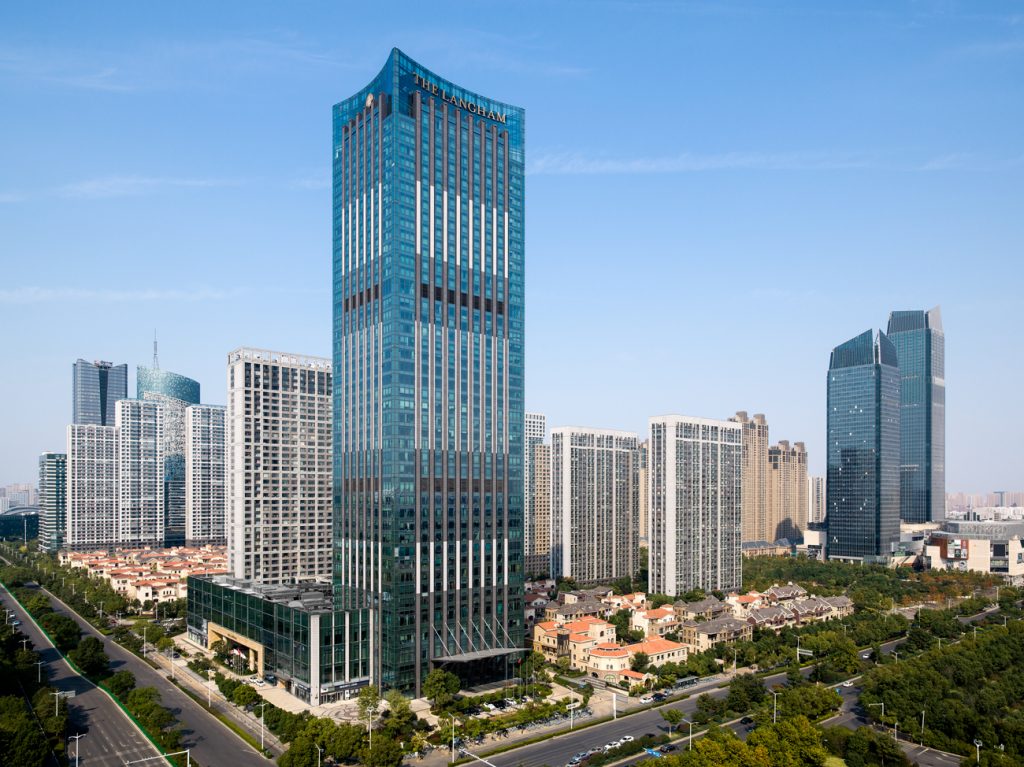
The second chapter of Yue Jian arrived a month later, again avoiding the obvious. In lieu of a global hub, the series moved to Hefei, approximately 450 kilometers from Shanghai, at The Langham, Hefei.
Located between the north and south, Hefei has long absorbed influences from the both. Its inclusive food culture makes it an ideal destination to explore how far Cantonese cuisine can stretch while keeping its essence.
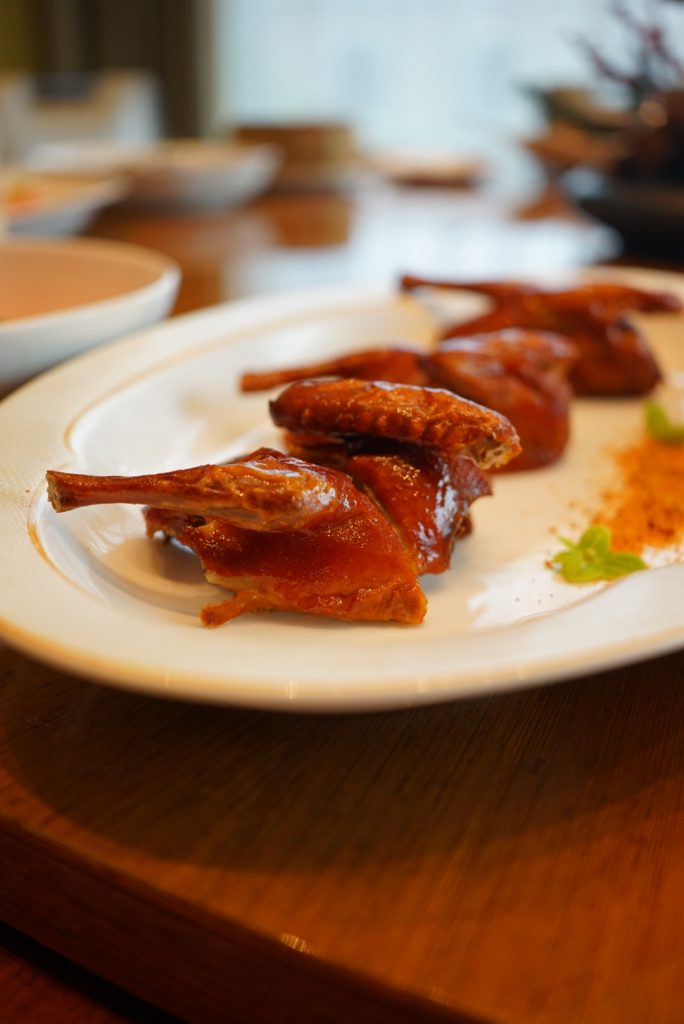
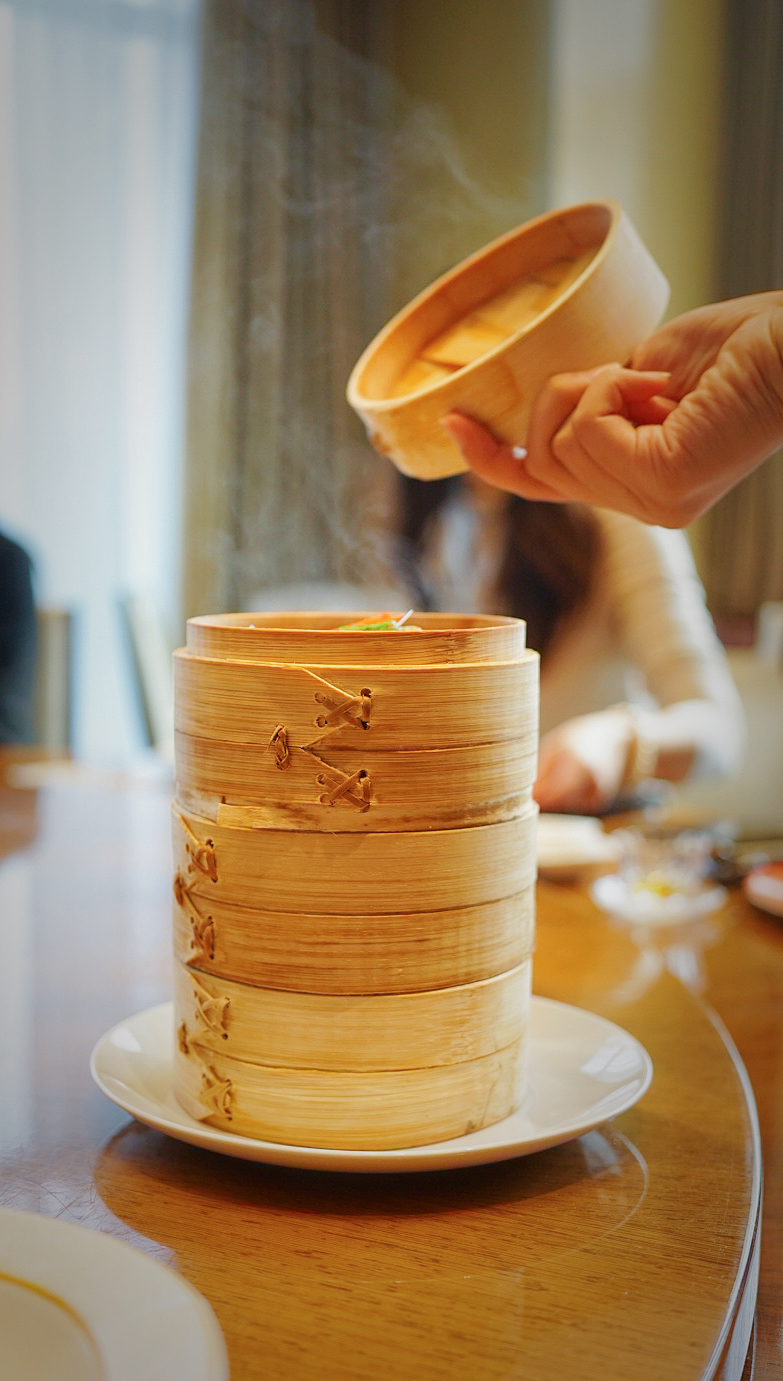
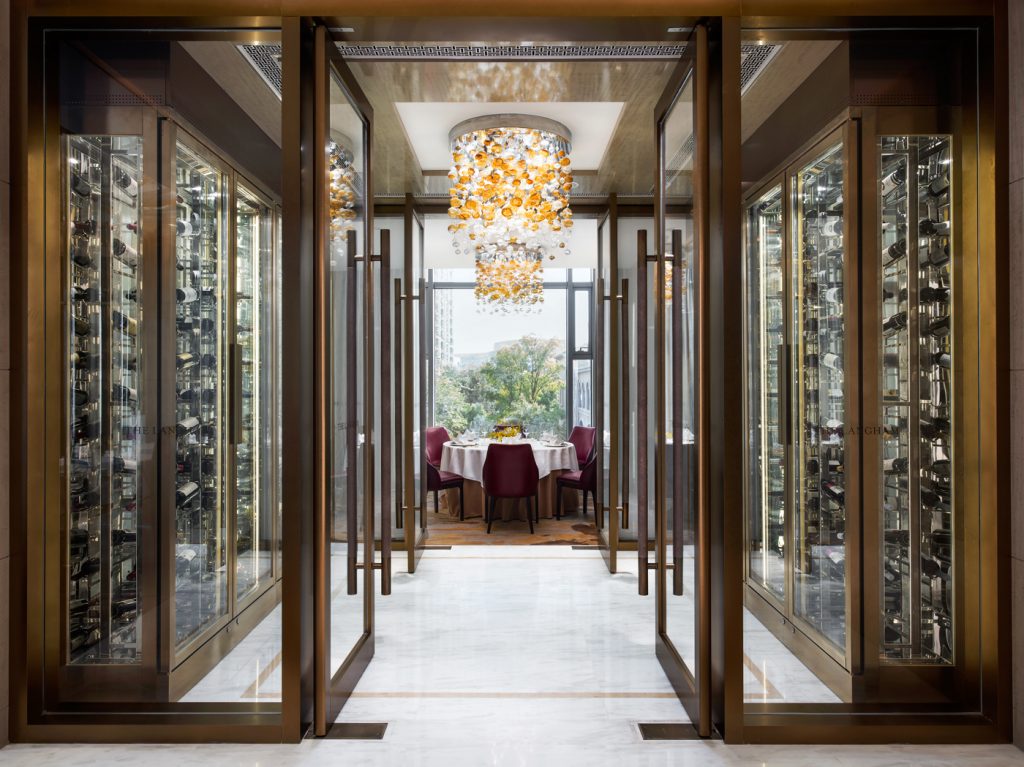
Langham’s culinary philosophy sets it apart from many hotel groups. Rather than offering a broad portfolio of cuisines, it remains focused on Cantonese cooking, under the T’ang Court or Ming Court banners. In Hefei, T’ang Court is led by Chef Leslie Du, whose two-decade career spans Beijing, Sanya, Bangkok, and the UAE. His cooking respects classical culinary art and appreciates contemporary tastes.
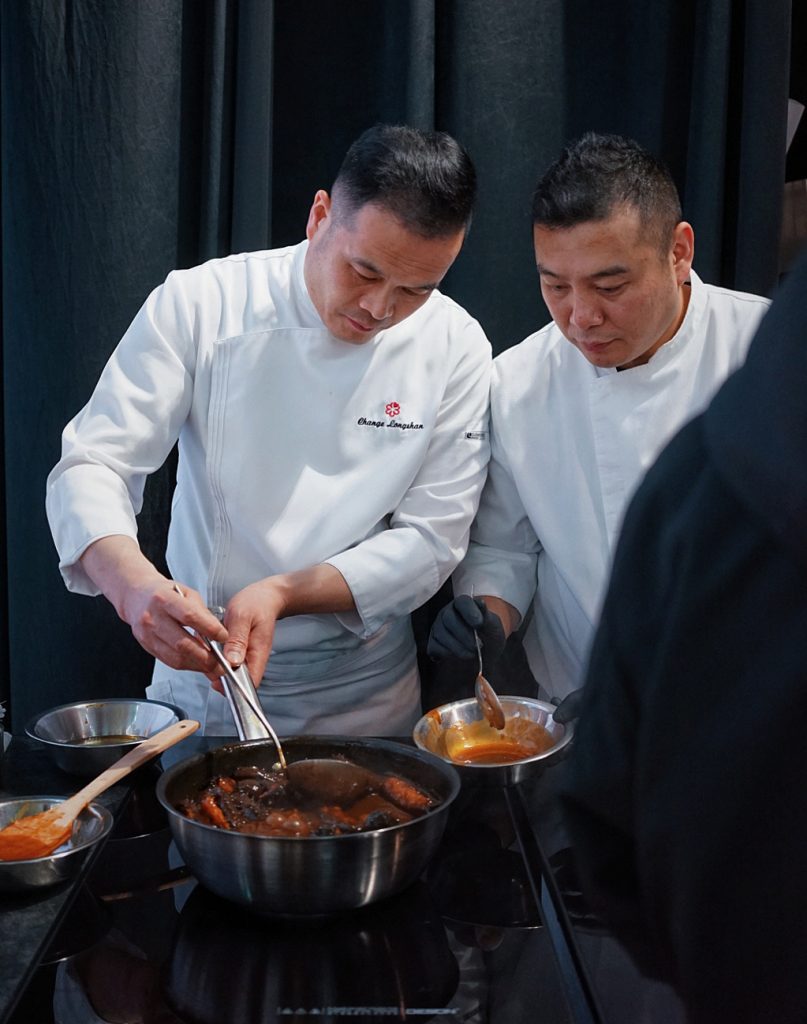
The dinner blended together Northeastern, Jianghuai, and Lingnan traditions – north, center, and south – through seasonal ingredients, techniques, and Anhui local produce. The menu translated Chinese culinary exchange into a focused, coherent experience, with Cantonese cuisine at its core.
The Cantonese-style soup – doubled boiled chicken soup with fish maw, melon and conch – stayed true to Cantonese principles while responding to terroir. It combined Feixi hen and black pork marrow bones, enriched with traditionally cured Huangshan ham, then lifted with Xuancheng ginger and Dangshan pear. Clear and layered, the soup was both familiar and local.
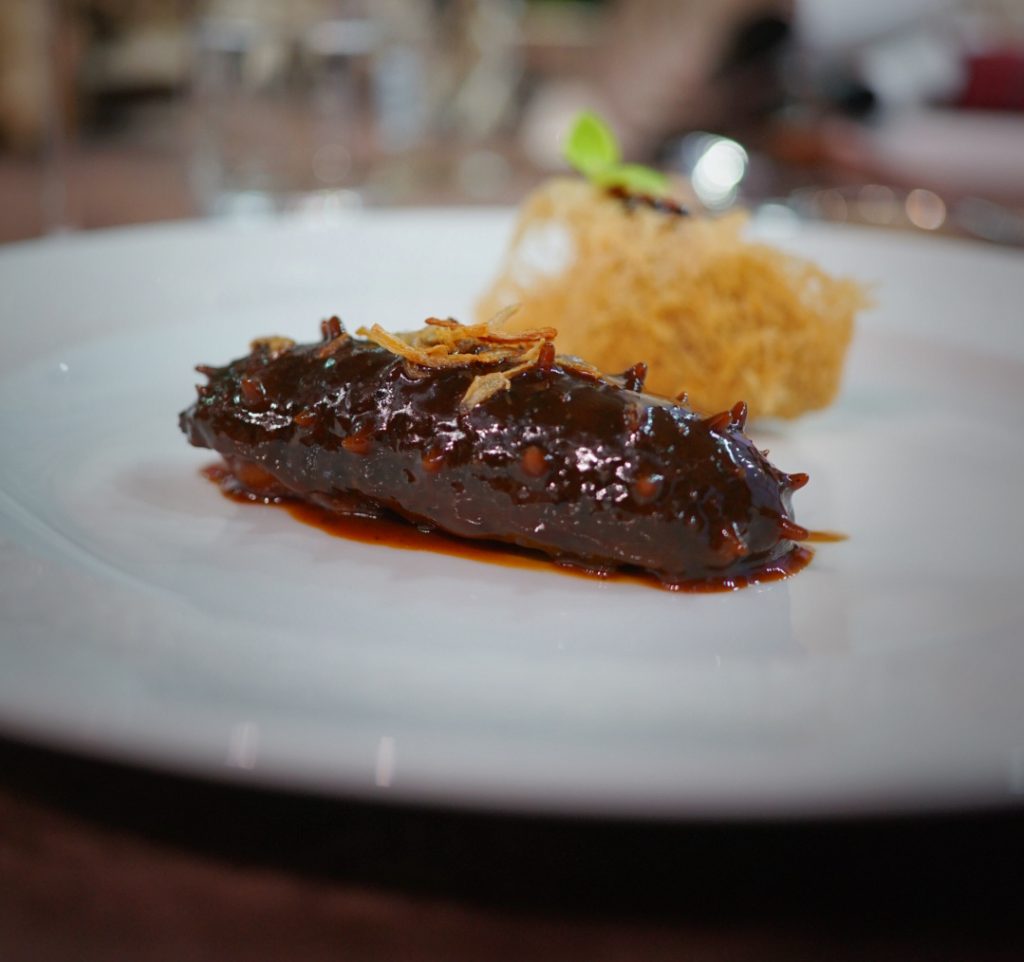
Equally revealing was a dish of shrimp-stuffed, braised sea cucumber served with crispy taro puff pastry. Each component is regionally iconic, yet together they formed a whole. Finely chopped shrimps stuffed into gently braised Liaoning sea cucumber delivered layered sweetness and a clean, oceanic depth – proof that Cantonese cuisine can absorb new influences without losing its identity.